
High-Stakes Legal Battle Escalates: Sony Files Preliminary Injunction Against Tencent Over Alleged ‘Horizon’ Knockoff










Popular Now
 The Legend of Zelda
 NBA 2K24
 Schedule I
 Gacha Club
 Warframe
 Fortnite
 God of War Ragnarök
 Free Fire
 Minecraft
 Roblox

The ongoing copyright and trademark infringement lawsuit between gaming titan Sony Interactive Entertainment (SIE) and Chinese conglomerate Tencent has reached a critical juncture. SIE has formally filed a motion for a preliminary injunction in a U.S. District Court, a powerful legal move designed to immediately halt the pre-release promotion and specific developmental aspects of Tencent’s upcoming open-world survival game, Light of Motiram.
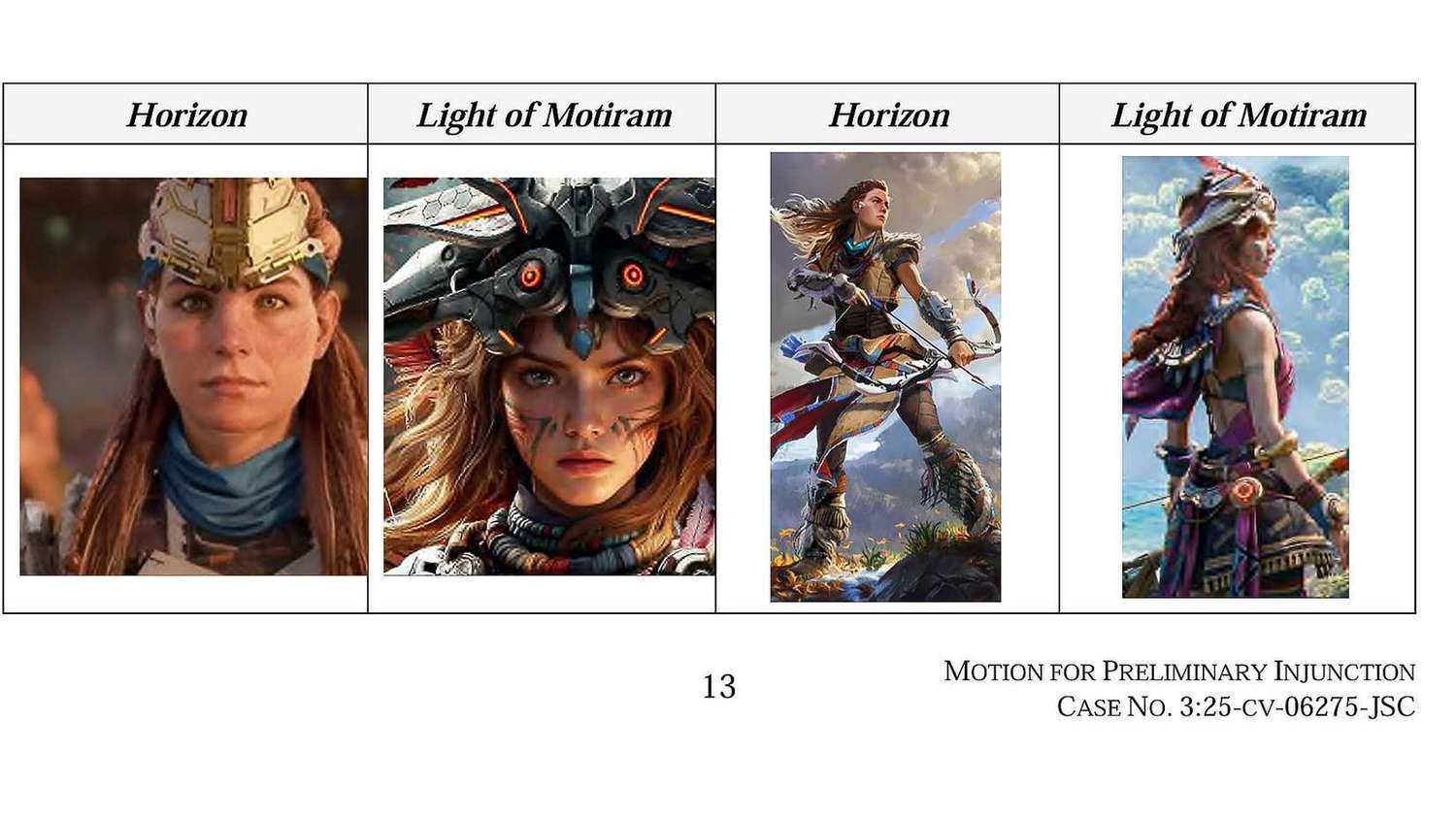
This aggressive legal action underscores Sony’s commitment to vigorously defending its highly successful and high-value intellectual property (IP), the Horizon Zero Dawn and Horizon Forbidden West franchise. The core of SIE’s claim, first filed in July, is that Light of Motiram is a “slavish clone” and a blatant knockoff game that copies protected elements, including the aesthetics, narrative themes, and—most notably—the visual identity of the lead character, Aloy.
The Heart of the Dispute: Aloy’s Likeness and Irreparable IP Damage
Sony’s injunction request specifically targets a flame-haired “tribal warrior huntress” protagonist in Light of Motiram, arguing that her resemblance to Aloy is so striking it constitutes direct trademark infringement and is causing significant consumer confusion. This is a crucial element in intellectual property law, as a preliminary injunction requires the plaintiff to demonstrate a likelihood of success on the merits and that they will suffer irreparable harm if the injunction is not granted.
In the latest court filings, Sony has countered Tencent’s previous motion to dismiss the lawsuit, dismissing Tencent’s defense as “nonsense” and asserting that the damage is already done—and continues—due to the public marketing. SIE points to numerous media reports and widespread gamer commentary online that have already labeled Light of Motiram as an “obvious rip-off,” a point Sony uses to demonstrate actual consumer confusion.
The injunction motion also seeks to prohibit the use of other contested elements, including:
- A distinct post-apocalyptic, tribal-tech aesthetic featuring large, mechanical creatures.
- Specific visuals and storyline elements that echo the Horizon universe.
- A particular melody in promotional trailers alleged to be too similar to compositions from the Horizon Zero Dawn soundtrack.
 Tencent’s Defense: Monopolizing ‘Well-Trodden Tropes’
Tencent, through its various subsidiaries including those responsible for developing and publishing the game, has maintained a firm stance. Their primary defense centers on the argument that Light of Motiram merely utilizes “time-honored tropes” and “genre conventions” common in open-world adventure and survival games. They argue that Sony is overreaching and attempting to establish an “impermissible monopoly” on elements already present in other popular titles, such as The Legend of Zelda: Breath of the Wild or Far Cry Primal.
The Chinese gaming giant has also contested the timing of the injunction, noting that the reported release date for Light of Motiram has been pushed back to late Q4 2027. Tencent argues that a game so far from launch cannot pose the “immediate threatened injury” required for a preliminary injunction.
Furthermore, Sony has accused Tencent of attempting a “shell game” by obscuring the exact corporate entity responsible for the alleged infringement, a tactic SIE claims is designed to shield itself from liability and delay legal proceedings. Tencent has also quietly updated the Light of Motiram Steam page, removing several contentious screenshots and the original cover image which featured the Aloy-like protagonist.
Market Implications: Setting a Precedent for Game Development and IP Protection
This case, taking place in the Northern District of California, has drawn significant attention from the global video game industry. It represents a high-profile showdown between one of the industry’s biggest IP holders and one of the world’s largest tech and gaming investment conglomerates.
A ruling in favor of Sony could set a crucial precedent for how closely competing developers can draw inspiration from successful franchises, particularly when the similarities extend beyond general genre conventions into specific, recognizable character design and aesthetic choices. Conversely, a ruling in favor of Tencent could bolster the defense of developers arguing for the free use of popular, though not strictly copied, design elements within the same genre.
The legal fight centers on billions of dollars in potential revenue and the long-term integrity of the PlayStation brand’s most successful new franchise of the past decade. For both companies, the stakes are exceptionally high-yield and will shape future IP strategy.
 Next Steps: Hearing and Judicial Review
Sony is requesting the court to hear the motion for a preliminary injunction before the end of the year. The outcome will be closely watched, especially since the case is being heard by Judge Jacqueline Scott Corley, who notably presided over the FTC’s failed attempt to secure a preliminary injunction against Microsoft’s acquisition of Activision Blizzard, demonstrating a keen judicial eye for the nuances of the modern gaming market.
If the injunction is granted, Tencent would likely be forced to re-design key assets of Light of Motiram, remove all offending promotional material, and potentially halt development on the infringing elements until the case’s final resolution. If the injunction is denied, the case will proceed to the discovery phase, but Sony’s ability to protect its brand from pre-release dilution will be significantly diminished.
The legal battle is a clear demonstration of the increasingly intense global competition for exclusive, recognizable, and profitable gaming IP, with multi-billion-dollar legal expenditure being seen as a necessary cost to protect valuable creative assets.